
The Indian women's football team suffered a heavy 0-8 defeat against Russia in their second international friendly in Kolkata. Russia displayed clinical finishing and exploited India's defensive weaknesses, scoring five goals in the first half and adding three more after the break, with multiple players bagging braces.

The US announced a 60-day pause on sanctions against Russia and tariffs on other countries, including India, to analyse the global economic impact. This decision, made via an executive order by Trump, has drawn significant criticism from both Republicans and Democrats, who had previously passed the Lindsey O. Graham Sanctioning Russia and Iran Act. US officials stated the waiver allows for assessment of global energy pressures and European allies' refusal to impose secondary sanctions on Russian oil buyers.

The Indian women's national football team, featuring several debutants, suffered a 0-4 defeat to a higher-ranked Russian side in the first of two international friendlies in Kolkata. Despite a strong defensive performance in the first half, Russia broke the deadlock before halftime and extended their lead in the second half, with substitute Kira Petukhova scoring twice. The match provided valuable experience for India's emerging players.

Trump has enacted a new law imposing significant sanctions on Russia and Iran, which could lead to tariffs of up to 100% on major energy importers like India and China.

External Affairs Minister S Jaishankar stated that the world is entering an age of flux marked by conflicts and tariff volatility, requiring India to respond effectively to these challenges. He reiterated India's consistent stance on the Russia-Ukraine conflict, advocating for dialogue and diplomacy, and highlighted India's efforts to engage with both sides. Jaishankar also emphasised India's role in championing the voice of the Global South and navigating complex strategic partnerships in a multi-aligned world.

'India is trying to project that it can engage with the world in a different way too.'

US Secretary of State Marco Rubio kick-started a three-day visit to India on Tuesday to advance bilateral ties in energy, trade and investment, defence, critical technologies, and exchange views on the West Asia crisis.

US lawmakers are racing to amend the Russia sanctions bill before recess. One amendment specifically names India, China, and other countries as potential targets for 100% tariffs due to their oil trade with Russia. Another significant amendment proposes to scrap the tariff section entirely, while others address presidential waiver powers and aid to Ukraine.

Russian President Vladimir Putin stated that Moscow would not interfere in the "delicate" bilateral relations between India and China, expressing confidence in their ability to resolve border disputes amicably. He also discussed Russia's independent partnerships with both nations, touched upon India-Pakistan ties, and highlighted ongoing and proposed defence cooperation with India, including the BrahMos missile and a potential Su-57 fighter jet project.

President Donald Trump is set to sign the Sanctioning Russia and Iran Act, which includes tariffs on countries buying Russian oil and gas, such as India. India has voiced concerns over the potential impact on its ties with the US and the global energy market.

US President Donald Trump is expected to sign the Lindsey O. Graham Sanctioning Russia and Iran Act of 2026 later on Friday (local time). A White House official confirmed the development to ANI without revealing further details.

Prime Minister Narendra Modi and Russian President Vladimir Putin held extensive discussions to strengthen bilateral trade, defence, and energy cooperation, while also addressing the ongoing Ukraine conflict and exploring avenues for peace and resolution, with Modi reiterating India's call for dialogue and diplomacy.
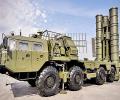
India is expected to receive the fourth unit of the S-400 Triumf surface-to-air missile system from Russia in the first part of next month, further enhancing the IAF's air defence mechanism.
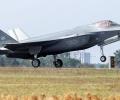
Indian Air Force Chief Air Chief Marshal A P Singh stated on Saturday that the US has not officially offered F-35 fighter jets to India, and no final decision has been made regarding Russia's Su-57 proposal. He made these remarks during the concluding ceremony of the multinational air exercise Tarang Shakti-2026.
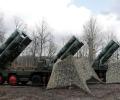
In a significant development, the Russian side has submitted a detailed proposal to the Defence Ministry in response to the Indian tender for acquiring five more squadrons of the S-400 Sudarshan long-range air defence systems for the Indian Air Force.

The move is meant to enhance the operational capability of the armed forces, reduce import dependence and increase domestic value addition.
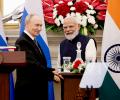
Russia, being bogged down by the Ukraine war and prioritising the requirements of its own armed forces, along with India's consistent diversification policy, will remain a major challenge to the bilateral partnership, note Harsh V Pant and Aleksei Zakharov.
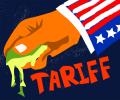
A bipartisan group of US senators has introduced a comprehensive bill imposing extensive sanctions on Russia, with India identified as one of five countries that could incur tariffs for its continued purchase of Russian oil.

Marco Rubio will visit Mumbai and Jamnagar to discuss energy cooperation as S Jaishankar says India-US trade talks are nearing a landing point, with a few issues unresolved.
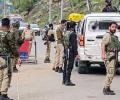
An Army officer's wife has been booked in Jammu for alleged espionage, accused of using AI tools like ChatGPT and Claude to write analytical papers on sensitive national security issues for Chinese intelligence operatives. The well-qualified freelance researcher, who had an IT internship with the UN, is cooperating with investigators after being intercepted at Jammu Tawi railway station. The probe focuses on her alleged contacts with foreign nationals and the nature of the sensitive documents found on her mobile phone.

US Secretary of State Marco Rubio, during his visit to Mumbai, affirmed that the US policy on weapons aid and intelligence sharing for Ukraine remains unchanged. He stated that President Donald Trump is "frustrated and angry" over false accusations of deliberately harming Ukraine and is keen on a negotiated end to the conflict. Rubio also addressed concerns about missile interceptor supplies and intelligence sharing regarding recent air strikes, attributing any issues to technical matters rather than deliberate denial. He highlighted global concerns over fuel shortages and the risk of escalation, stressing the urgent need to end the war.

Prime Minister Narendra Modi and US President Donald Trump held a telephone conversation to review progress in bilateral ties, covering trade, defence, and energy, against the backdrop of heightened trade friction due to the 'Lindsey O. Graham Sanctioning Russia and Iran Act of 2026'.

One of the important topics of discussion between the two leaders is expected to be the Northern Sea Route and the Chennai-Vladivostok Maritime Corridor.
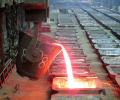
Hyderabad-based Nexon Geochem has partnered with Russia's Giredmet to establish integrated rare-earth processing and downstream facilities in India. This collaboration aims to bridge critical gaps in India's rare earth value chain, focusing on producing NdFeB permanent magnets essential for electric vehicles, wind turbines, and defence systems, reducing reliance on imports.

Ahead of President Vladimir Putin's visit to India for the BRICS summit, Russia has expressed support for New Delhi's peace initiatives to resolve the Ukraine conflict. Discussions between Putin and PM Modi will cover defence, energy, technology, and the repatriation of Indian nationals from the Russian military, alongside addressing trade and investment ties.
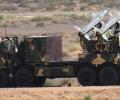
Indian defence stocks have seen an average year-on-year gain of 67 per cent, driven by renewed interest following 'Operation Sindoor' and a broader increase in global geopolitical tensions, with the combined market capitalisation of 18 firms increasing by approximately 2.3 trillion.

External Affairs Minister S Jaishankar met US Secretary of State Marco Rubio on the sidelines of the UN General Assembly session in New York. India raised its concerns regarding the recently signed "Lindsey O. Graham Sanctioning Russia and Iran Act of 2026," which authorises tariffs on countries buying Russian oil and gas. Both leaders also discussed bilateral relations, regional priorities, and the situations in the Gulf and Ukraine.

Russia's First Deputy Prime Minister Denis Manturov met with Indian leaders to discuss strengthening bilateral ties in key sectors amidst the escalating conflict in West Asia.

Russian President Vladimir Putin asserted that any attempts to undermine India's sovereignty through 'threats of sanctions' would 'boomerang immediately' under Prime Minister Narendra Modi's leadership, highlighting India's sovereign decision-making and strong national interests.

Prime Minister Narendra Modi urged Russian President Vladimir Putin to move from 'endless war to the end of war' in Ukraine, emphasising that a peaceful resolution is humanity's shared priority.

Indian stock market investors are closely monitoring crude oil prices, geopolitical developments in West Asia, and the implications of the US Sanctioning Russia and Iran Act, which could impose tariffs on countries, including India, that purchase Russian crude.

Air Chief Marshal AP Singh has voiced concerns over significant delays in inducting new combat jets, including the Tejas aircraft, which are impacting the Indian Air Force's depleting fighter squadron strength. He stressed the need for annual induction of 36-40 jets to address the gaps and discussed ongoing procurement plans like the MRFA deal and future strategies for combat aircraft and theatre commands.
China has expressed its support for Russia's initiative to revive the Russia-India-China (RIC) troika, emphasizing its importance for regional and global security and stability.
In Operation Sindoor, Pakistan had deployed additional squadrons of the Chinese-origin HQ-9 air defence systems, which could not do much against the Indian aircraft when they brought down multiple terror targets inside Pakistan.
When the technology gap between China and India will remain large, cost-effective hardware of the kind that proved their worth in Operation Sindoor should be our priority, points out R Jagannathan.

Russian President Vladimir Putin has arrived in India for a three-day visit to attend the BRICS summit and hold bilateral talks with Prime Minister Narendra Modi, focusing on expanding trade, investment, and energy cooperation amidst global geopolitical challenges.

'It is a blunt and dangerous attempt to pressure India to sign BTA on one-sided terms.'

Air Chief Marshal AP Singh, Chief of Air Staff, has expressed significant concern over the inordinate delays in inducting new combat jets, including the indigenous Tejas aircraft, stating that these delays are severely impacting the Indian Air Force's depleting fighter squadron strength. He highlighted the need for 36-40 new fighter jets annually to address these gaps and voiced worry over Pakistan's collaboration with China on a fifth-generation fighter jet.

The political confidence required to place high-end Japanese aircraft and personnel on Indian soil is itself a data point.
It indicates a level of trust that would have been difficult to imagine when India-Japan defence ties were largely symbolic, explains Varun Arya.

India and Russia have agreed to encourage joint manufacturing of military hardware and spare parts in India, aiming to improve maintenance of Russian-origin defence equipment and boost overall bilateral defence cooperation.
